Hair care and salon visits, explained
Washing Hair Towels and Pillowcases: Why It Matters
9 November 2026
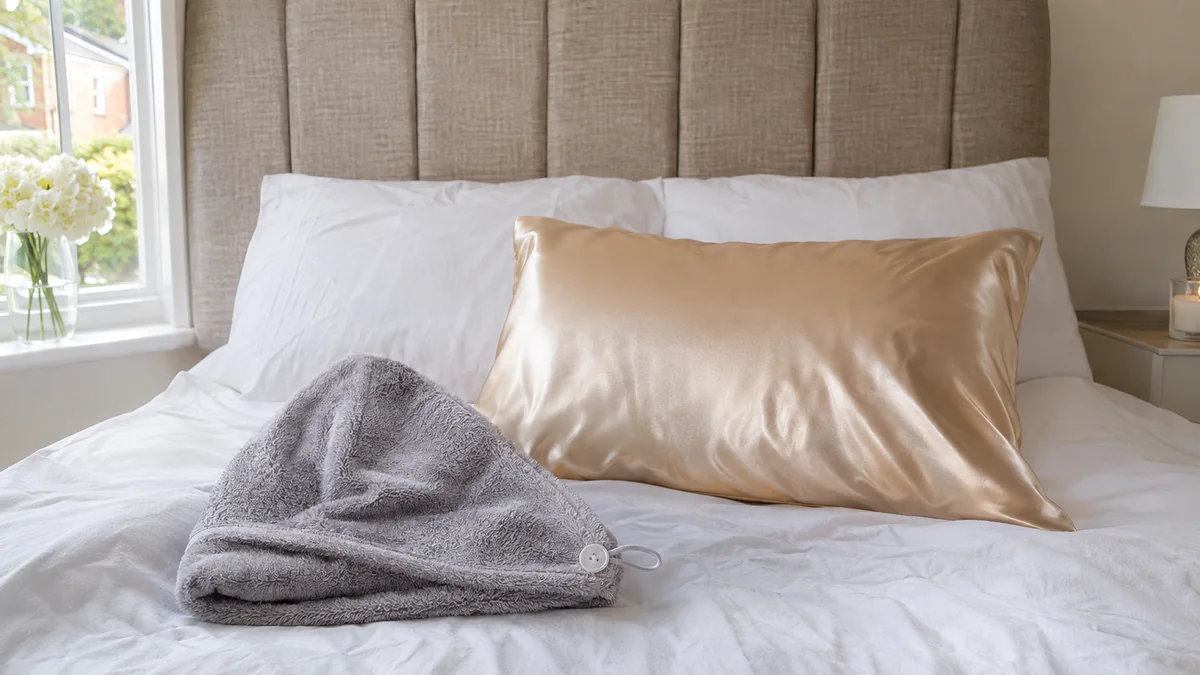
Washing hair towels and pillowcases regularly matters because they pick up hair products, natural oils and loose hairs every day, and that build-up can end up back on freshly washed hair. A common rule of thumb is to change pillowcases weekly and wash hair towels after a few uses, drying them fully in between.
Quick answer: Hair towels and pillowcases collect styling products, oil and hair. Many people change pillowcases once a week and wash towels after three or four uses. Follow the care label, use the right amount of detergent, skip fabric conditioner on microfibre, and dry everything fully before you use it again.
Key Takeaways
Towels and pillowcases hold on to product residue and oil from your hair.
Weekly pillowcase changes are a simple habit that many people follow.
Microfibre and silk need gentler care than cotton.
Use a dark towel after colouring to avoid stains on your good ones.
Why Hair Towels and Pillowcases Get Grubby
Every time you towel-dry, you leave behind a little of whatever is in your hair: conditioner, leave-in treatments, oils and serums. Pillowcases collect the same things overnight, along with hair spray, dry shampoo and loose hairs.
Fabric that is heavy with residue doesn't absorb as well, and it can feel stiff or smell stale. Fresh towels and pillowcases are simply nicer on just-washed hair.
How Often to Wash Them
There is no fixed rule, but these are common habits:
Pillowcases: about once a week, or more often if you use a lot of styling product.
Hair towels and turbans: after three or four uses, as long as they dry fully between uses.
Towels used after colour or treatments: straight after use.
A towel that stays damp in a heap smells sooner. Hang it out flat to dry after each use and it will stay fresh for longer.
Washing Different Fabrics
Cotton towels and pillowcases
Cotton usually takes a warmer wash, but the care label has the final say. Don't overload the drum, and use the amount of detergent the pack suggests. Too much leaves a residue of its own. If you would like a fragranced powder for these loads, Distinctive Wash is one UK business that sells luxury washing powder.
Microfibre hair towels
Microfibre is popular for drying hair because it is light and absorbent. Many makers advise washing it without fabric conditioner, which can coat the fibres, and keeping it away from fluffy cotton towels so it doesn't pick up lint.
Silk and satin pillowcases
These are delicate. Check the label: many need a cool, gentle cycle in a mesh bag, or a hand wash, and should be dried away from direct heat.
After Colouring Your Hair
Hair colour can mark pale towels and pillowcases for a few washes after a new colour. Keep an old dark towel for this, and use a dark pillowcase for the first few nights.
Planning to colour at home? Do the patch test first. Our guide to the hair dye patch test explains how and when.
Small Habits That Help
Keep a separate towel just for your hair.
Let styling products dry before you lie down.
Shake out pillowcases and towels before washing to remove loose hairs.
Store clean towels only once they are completely dry.
Clean towels and pillowcases are a small part of hair care. If your scalp is itchy or flaky, washing your bedding more often won't fix that by itself. Our page on dandruff and itchy scalp explains what the guidance says.
Frequently Asked Questions
Can I wash hair towels with my other towels?
Cotton ones, yes. Wash microfibre separately so it doesn't pick up lint.
Should I use fabric conditioner on hair towels?
It is best left off microfibre. On cotton, use it sparingly if at all, as it can make towels less absorbent. If you would like some help with this, get in touch with our team.
Does my hairdresser care about this?
A good one will happily talk you through how to look after your hair between visits. Our guide on how to choose a hairdresser covers what to ask.
Start tonight: put a fresh pillowcase on and hang your hair towel out flat after you use it tomorrow.